

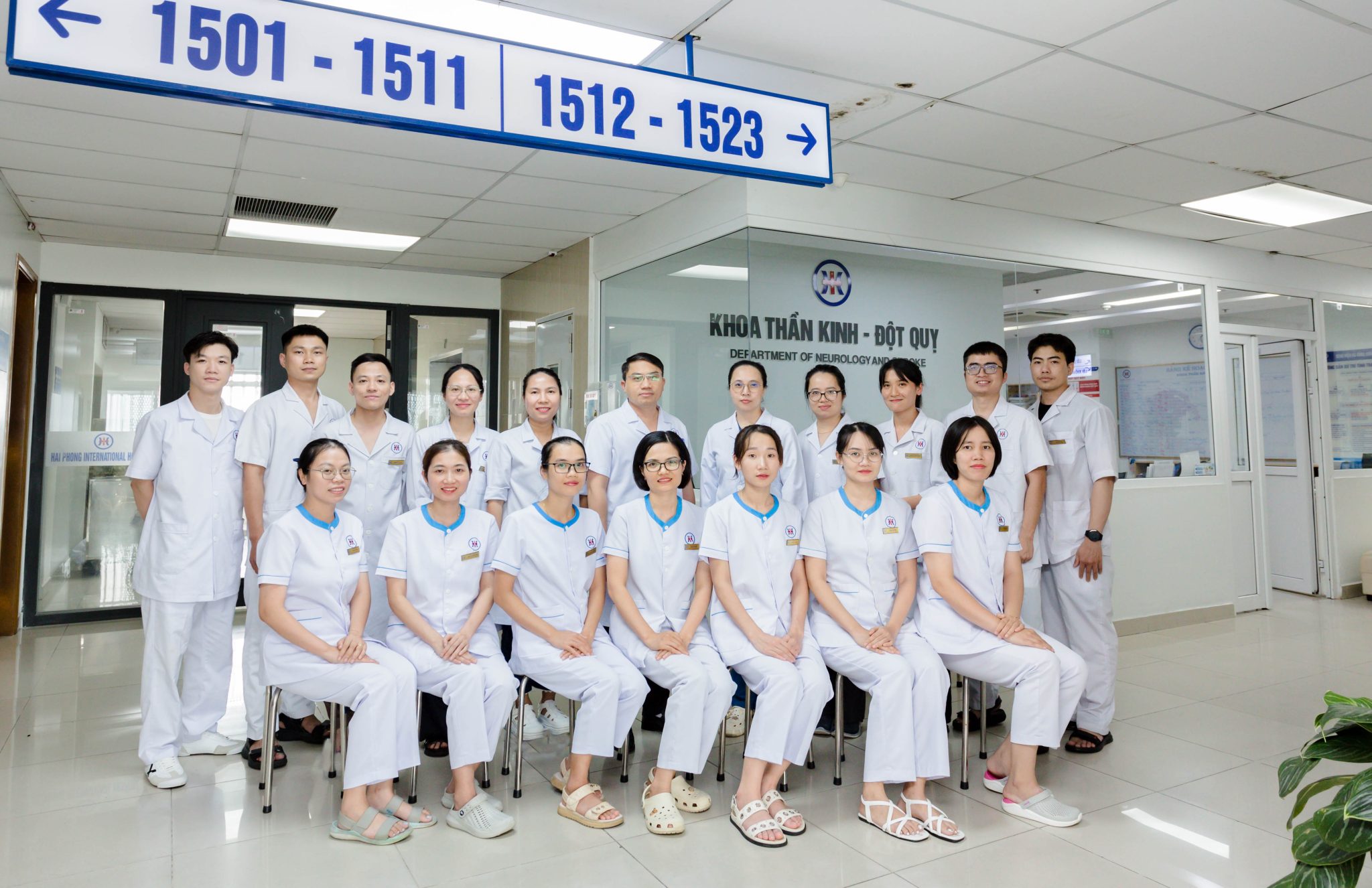
Department of Neurology and Stroke
Overview
The Department of Neurology – Stroke is located on the 15th floor of the Hospital, staffed by a team of experienced specialists and physicians with extensive expertise in diagnosing and treating neurological disorders, while applying advanced technology in diagnosis and treatment to bring optimal results to patients.
Our medical team continuously updates their knowledge and applies the most advanced techniques available today to improve the quality of healthcare for the community.
Functions and Responsibilities
- Examination, consultation, screening, and management of stroke risk factors;
- Emergency care and treatment of stroke according to standard protocols, optimizing the “golden hour”;
- Comprehensive treatment and management of acute and chronic neurological conditions: epilepsy, Parkinson’s disease, myasthenia gravis; sciatica, shingles and post-herpetic neuralgia, headaches, trigeminal neuralgia, etc.;
- Peripheral nerve entrapment: carpal tunnel syndrome, ulnar nerve compression, radial nerve compression, common peroneal nerve compression, etc.;
- Treatment of conditions such as: dizziness, tinnitus, sleep disorders, anxiety disorders, neuropathic pain, etc.;
- Implementation of specialized techniques for the diagnosis, treatment, and neurological rehabilitation;
- Consultation and guidance on relapse prevention and post-treatment care.
Treatment Techniques
- Thrombolytic drug therapy and mechanical thrombectomy (cerebral vascular intervention) for stroke patients who arrive within the “golden hour”;
- Electromyography (EMG): used to investigate and diagnose neuromuscular conditions;
- Electroencephalography (EEG): used to detect abnormal brain wave activity to help diagnose seizure disorders and epilepsy, enabling effective treatment of seizures. Treatment of neurological conditions and cerebrovascular accidents through the application of advanced treatment methods;
- Transcranial Magnetic Stimulation (TMS): applied to support the treatment of treatment-resistant depression, anxiety disorders, sleep disorders, chronic pain, and post-stroke rehabilitation.
Equipment
The Department is equipped with a modern system of machinery for fast and accurate diagnosis, including MRI, CT Scanner, cerebrovascular Doppler ultrasound systems, along with advanced neurological function testing equipment (EEG, EMG, etc.) and Transcranial Magnetic Stimulation (TMS), effectively meeting the demands of specialized treatment.
Development Orientation
Related posts